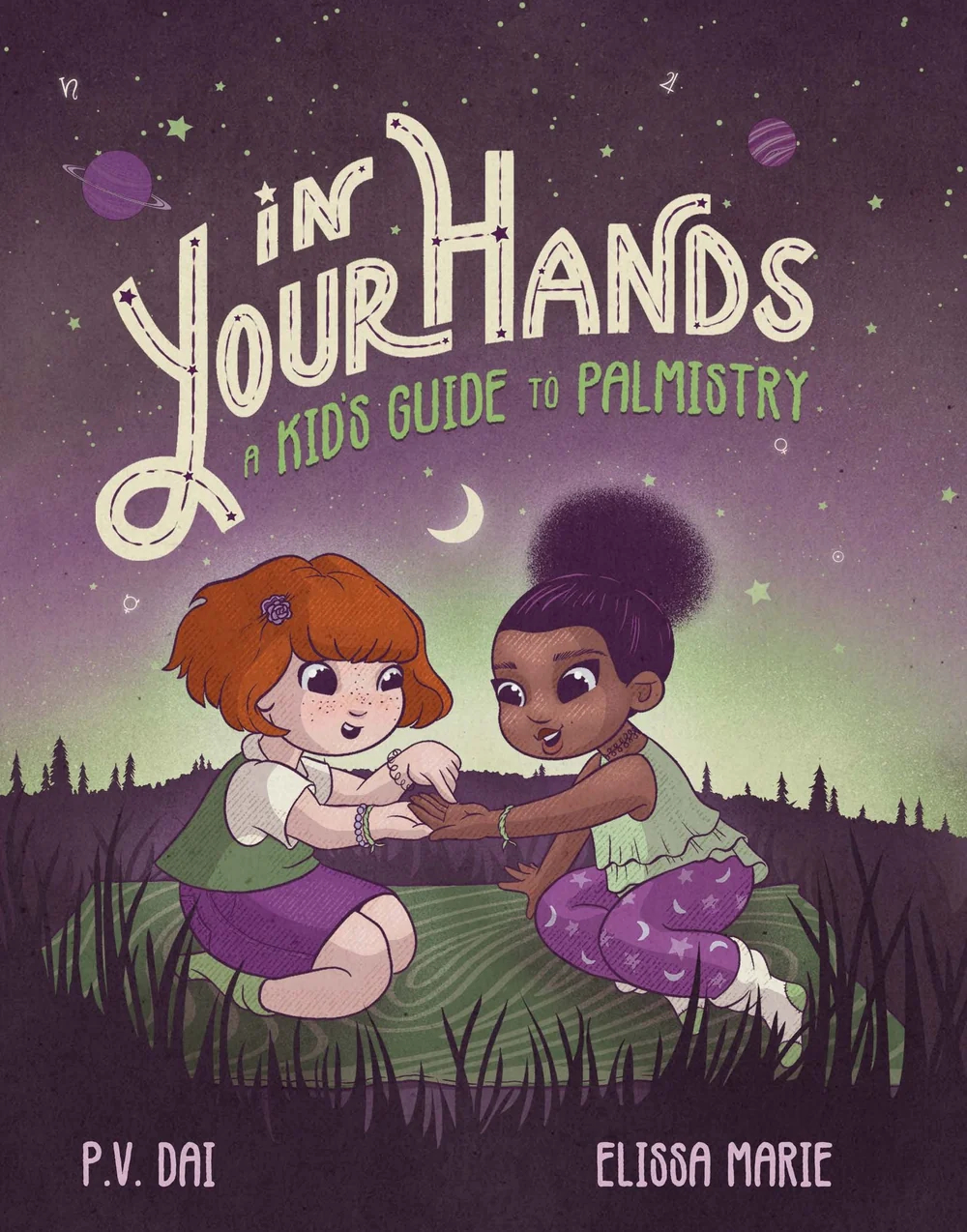
P.V. Dai’s interest in palmistry began in her childhood and when she grew up it became her paid profession. For many parents, the idea of their child growing up to be a paid fortune teller would be enough to make them run away screaming. If that is not you (or the child is not yours), then read on. The chapters are brief, succinct, and enthusiastic. The words are paired with the digital artwork of Elissa Marie who illustrates the concepts in a cool purple and green palette. From the front cover onward, the entire book is filled with these pictures just as you would expect from a children’s book.
Most of the book is really a guide to looking at hands and recognizing different physical characteristics such as hand shape, finger length, angles between the thumb and palm, and whether parts of the palm are raised or flat. Each of these physical characteristics have an attributed meaning that has been used by palm readers for centuries. So, the length of the thumb may indicate whether someone leads or follows the leader, is bossy or prefers to observe. The shapes of lines represent things like pauses, sad or happy events, or whether someone is sympathetic. The names of the parts of the hand have a definite western mystical vibe like Fire Hand or Mount of Venus. The most famous aspect of palm reading, the lines, is at the end of the book. I like how the life line is described not as length of life but as how you live or the path of a person’s life. Care was taken to adjust the messages so this is a fun practice instead of a scary one for the children and the people they practice palmistry on.
Recommended for kids who are at least 10 due to the language and reading skill required.
~review by Elsie Smyte
Author: P.V. Dai
Moon Dust Press (Red Wheel/Weiser), 2026
125 pages, $19.99