Here you are, going along with your life, reasonably sure of your place in it, good or bad. And suddenly everything changes, the main industry in your community collapses, the government is overthrown, and the people now in charge don’t even speak your language or follow your religion. What is going on? And how can you possibly get some control over your life again, find some kind of stability? This was the situation of much of the world when the empires swept through in the 18th and 19th centuries – in the Americas, in much of Asia, and particularly in Africa.
And worse, this was not one event, but a wave of changes kept happening after the empires formally dissolved but modernization intensified up to the present. One response to this loss of control and power is a rise in magic and witchcraft, hybridizing elements of tradition with insights about the flow of energy through these new structures of capitalism, bureaucracy and literacy.
Ritual and magic have been said to separate rational modernity from traditional culture, but ritual exists in history, adapting and changing, just as tradition expands to include change. Colonialism, the cash economy, bureaucratic governments, the capitalist marketplace all brought adaptation to tradition, but not its destruction. In late 20th century Africa ‘modernity’ brought forward tradition and culture. The common view that modernizing social forces and commodities erase local cultural differences is incorrect. Culture remains complex, plural, diverse and dynamic, and constantly adds and adapts in response to the forces pushing on it. There are many modernities and Western hegemony is not human destiny.
Nation-building has begotten new witchcraft and magic. Ritual is used to make and remake social facts and collective identities. It reflects practices that explain reality with authority stretching beyond the present. Ritual and magic are media for making new meanings, new ways of knowing the world and its workings, with their pragmatic and innovative qualities that exist in tension with mundane modes of action and remain open to new associations and diversity. Hybridization transforms influences or ideas originating from outside into a new indigenous magical expression. Ritual responds to modernity and progress, the market economy and urbanization, colonial powers, as a form of magic and incorporates some of that magic to carve out space to resist it. Rational efforts to identify and redirect the flow of power in the world lead to pragmatic magical innovation and action.
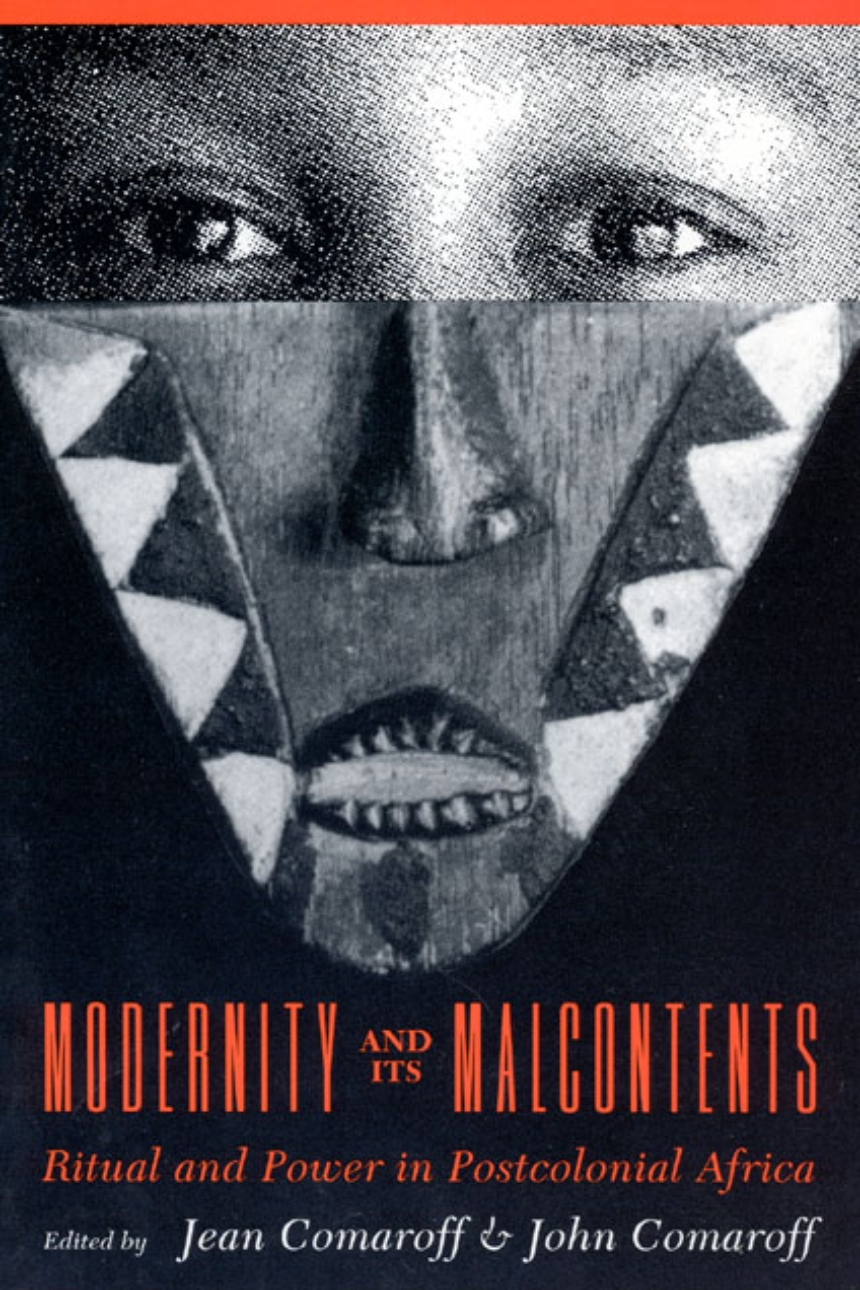
These reflections of mine, after reading this collection, are all sort of abstract, but this collection is not, once you read past the very dry introduction. Most chapters are in-depth case studies of magical ritual and adaptation in post-colonial Africa, based in anthropological field work.
Adeline Masquelier’s very interesting opening chapter on the ritualization of the market in an area of Niger as both adjustment to the introduction of a money and market economy with French colonialism and resistance to the pressure from the growth of Islam gives a detailed history of these cultural adaptions and the pressures active in both colonial and post-colonial times.
Chapter two by Deborah Kaspin deals with the transformed meanings of a community purification ritual in Malawi. It pairs well with Mark Auslander’s chapter seven on a witch-finding ritual to “Open the Wombs” and bring fertility and prosperity to a village in eastern Zambia in 1988 in a detailed up-close portrait. This community was dealing with the AIDS crisis, resource exploitation with profits going elsewhere, migrant labour, a guerilla insurgency, corrupt government, and other stresses.
Chapter three is a sexual and gender exploration of the Yoruba religious trope of ‘mounting’ in Nigeria by J. Lorand Matory. The valuing of women’s sexuality as a paradigm of royal government and production, with community leadership defined in terms of female reproductive power, in competition with the encroachments of Islam and Christianity in the Yoruba territories. The key role of transvestite male priests of Shango reminds me of the genderfluidity in the Afro-diasporic religions in the Americas which descended in part from the Oyo-Yoruba people.
Ralph A. Austen’s “The Moral Economy of Witchcraft: An Essay in Comparative History” deals with similarities and differences in the experiences of Africans and early modern rural Europeans as their communities were overwhelmed by market economies centred elsewhere. Witchcraft is not a reified analytical category but a kind of moral argument. This, for me, is the standout essay, removing the ‘exotic’ veneer from the treatment of witchcraft and restoring it as a strategy of people faced with similar challenges, especially the breakdown of the common good with the capitalist ideal of unlimited individual acquisition. His discussion of gender and reproductive power in the European context is an interesting counterpoint to Matory’s essay in chapter 3.
In chapter five Andrew Apter examines an anti-witchcraft movement in Yorubaland in the early 1950s as a response to rising cocoa prices and the control of that market with historical consciousness of commodity and class working on the costs and contradictions of progress.
Misty L. Bastian’s chapter on the Nigerian popular press and its coverage of witchcraft in the late 1980s has a fascinating discussion of literacy and its role in culture, in a society in transition away from an oral preliterate state, and the continued existence and power of witchcraft in urban Nigeria.
And the final chapter by Pamela G. Schmoll on Soul-Eating among Hausa in Niger returns to local jealousy and malevolent witchcraft around prosperity, but prosperity that includes spiritual force and luck. The growth in monetization of relationships in the community, after colonization and introduction of a money economy, with traditional bride gifts and gifts among friends shifting to cash gifts, made class differences and competition for access to the cash economy stronger.Academic, yes, but with fascinating insights into contemporary African magic and witchcraft in both urban and rural settings, discussing the adaptation of tradition to deal with modern pressures and the legacies of colonialism.
~review by Samuel Wagar
Editors: Jean Comaroff and John Comaroff
University of Chicago Press, 1993
233 pg. Paperback £25 / $45 Can / $33 US