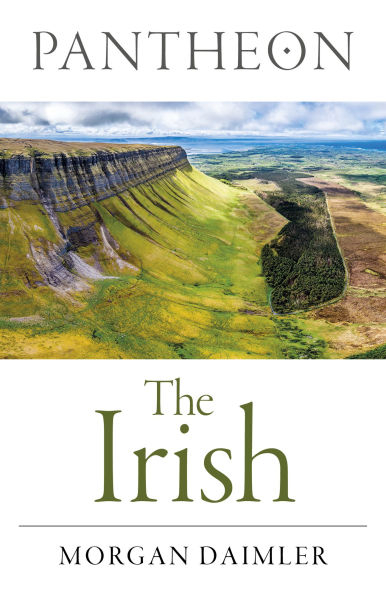
Pantheon: The Irish takes an exclusive look at Irish paganism rather than the broader scope of Celtic paganism. The author addresses some common misconceptions that have been broadcast through the international pagan community. The book begins with history, belief and culture and then moves into specific Irish gods and spirits. As such, the book’s strength lies in research into verifiable sources that would hold up to scrutiny. It’s perhaps not the easiest book to begin with even though the author intended it to be introductory.
So what’s not easy to understand about Irish paganism? A significant amount of what is known has come down through the ages from the hands of Christian scribes and clergy writings and that is the information that survived. Much of ancient Irish belief is unknown because the knowledge was destroyed. No pagan era myths without the lens of Christianity exist today. We’re left with a lot of speculation and questions about how much that was written is actually true and not distorted. Daimler works hard to tell the reader what is known and what is not known. She is of the opinion that there is truth buried in the Christian writings that described ancient myth and practice. This book is an overview so think of it as a starting point if you want answers based in known facts.
A sample of topics covered include Irish pagan holidays and the reason for the variation in the dates they are celebrated; some of the differences between the Irish pantheon and other Celtic pantheons; ways in which Irish paganism is not the same as other pagan traditions like Roman or Greek, Irish magic and Ogham. The Gods and Goddesses and spirits are each described in part two and the reader is given a brief intro to their mythology.
As I’m not very familiar with Irish mythology, I think I would have found it easier to start my study with the stories. Then after knowing them better, it would be easier to follow the discussion on what we know historically. The book is arranged by the individual deity or spirit with a synopsis of what they are known for. This is good for reference but the myths get brought up repeatedly in different places and it’s a little choppy for those who don’t know the stories so well. For this reason, I would suggest that you read the mythology before picking up this book. If you’re Irish, you probably studied this in school already and this book might seem a lot more basic than it does to the rest of us.
A chapter on cosmology tries to outline some basic beliefs but again there are gaps in our knowledge. A chapter on the Otherworld talks about the world of the Aos sidhe, what most of us know as fairies. Curiously, this was the section of the book that was most familiar to me. I think it speaks to how the fairy tradition has crossed borders and cultures in a way that the entire pantheon of Ireland has not.
Another challenge for anyone new to Irish myth and paganism is that Irish Gaelic names are spelled in a way that confounds English speakers. I am multilingual but this is of no help when trying to pronounce or remember Irish names. Daimler writes about Dagda, “His children vary by source but are usually given as Óengus mc ind Óg, Cermiat, Aodh Caomh, Conan, Midir, Bobd Derg, Ainge, Finnbheara, and Brighid.” With context, I could figure out that Óengus is the equivalent of Angus but would you guess that Bobd is pronounced bowed? If not, you’ll need to go online to find Irish pronunciation of these names so you don’t sound foolish if you ever talk about them. I don’t fault the author for not providing a guide to pronunciation given that this is available online to hear spoken.
Daimler discusses that there is no unified Celtic culture. Celts did not have the same Gods in every area with Celtic peoples so Ireland has Gods and Goddesses that are not found elsewhere. The author sees modern Irish paganism as a semi-open practice but she opposes some of the ways that the Irish Gods have been promulgated outside of Ireland without real knowledge of native Irish culture, history, language and current practice.
Daimler describes herself as antiracist, antixenophobic and antihomophobic and she does not see Irish or Celtic ancestry as a requirement to practicing modern Irish paganism but stresses the need to develop a connection to Irish culture. Students who feel called to Irish paganism should consider studying Irish Gaelic as part of that journey. Daimler is gentle in her approach to this topic considering the history of English invasion and influence in Ireland and the modern misrepresentations of the Irish pantheon in some pagan books.
If you’ve already read Irish mythology and want to go a step deeper, read Pantheon: The Irish.
Recommended.
~review by Elsie Smyte
Author: Morgan Daimler
Moon Books, 2025
155 pages, $16.95