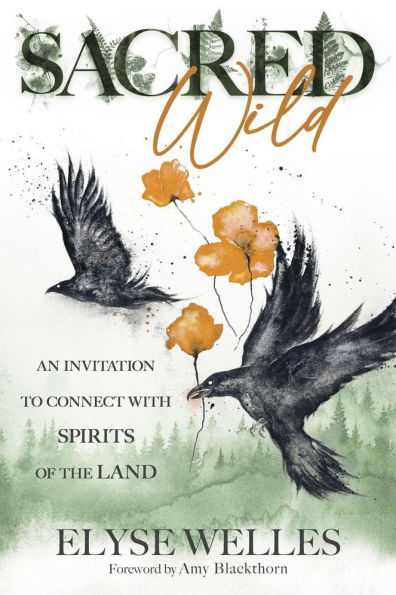
Animism and spirit work seem to be some of the toughest nuts to crack for Neopagan authors. Even allowing that almost all topics in this genre include some amount of describing intangible and often incredibly personal subjects, spirit work is almost entirely your personal interaction with "Other". My own path has increasingly directed me towards non-theistic spirituality, and so I was particularly keen to crack open this brand new book from Elyse Welles, Sacred Wild: An Invitation to Connect with Spirits of the Land. Welles has contributed articles to various publications but this is her first nonfiction book. She is largely based in Greece, where she conducts sacred retreats and other work.
To begin with the conclusion: I found this to be a valuable and well-written book. Whatever her previous experience, Welles has an engaging writing style that helps facilitate taking in everything she's trying to share. She has a cohesive view of the spirit world and imparts it with clarity. In the early 1/3 or so of Sacred Wild she explains how she sees land spirits in their most fundamental form (that of the literal, tangible, earth beneath our feet, the plant life etc...) and shares how you can develop your relationship with these spirits. She shines in this early portion, with numerous practical exercises for discovering the nature (if you'll pardon the pun) of the spirits in your area and how to introduce yourself to them. (She notes that they likely already have you clocked; the introduction is more a matter of being polite.) She even begins your process of working with these spirits, looking to fundamental energy work (gathering and grounding especially) for this start. Later on she takes the reader deeper in, looking at magic with weather and with plants, and even how urban environments entwine themselves with the spirits that were already there. Chapter 11, "In Sacred Relationship", is a bit of writing that I'd love to see excerpted and shared in some way because of its focus on how any person, practitioner or otherwise, is already in relationship with the earth whether they intended to be so or not, and how that person can be a better participant in the relationship. Once you have this book, don't be surprised when you're sharing it with friends, bookmarked to that chapter, with urgent encouragement that they should read and absorb it.
I do quibble just a bit. Her viewpoint, in the broadest possible strokes to begin with, sees nature spirits by default in a benign and even benevolent light, and she proceeds from there. I'm always a little leery of any practice that seems to assume good faith and positive intentions from eternal forces of nature; they're never annoyed with the human intrusion? Maybe so, but keep your eyes open says I. Welles believes that the practices she describes are "for everyone, regardless of your spiritual or religious beliefs. Witches, pagans, Druids, Heathens, healers, and those who prefer no labels at all will benefit from the addition of land spirits work..." As a result, the meditations and exercises she offers up throughout Sacred Wild have a certain generality to them; meant to fit into any practice they are by necessity smoothed of any rough edges (i.e. particularly strong points of view). This is not at all bad, in my opinion, although it does mean that the very eclectic nature of her offered exercises seem divorced at times from the roots of their original practice. There are descriptions of working a Clootie tree as well as agape tables (or feasts as they are sometimes called), alongside talisman creation. All valuable practices, but less powerful in this reviewer's opinion when they are extracted from holistic practice. To be fair, Welles includes an annotated reading list that runs several pages and does point the reader towards many valuable sources on these subjects, but that's leaving a lot of the heavy lifting to a reader who may otherwise not consider the issue. I don't think that this in any way takes away from the valuable introduction to spirit work that you find in Sacred Wild, but I do think readers should keep a weather eye on possible blind spots so as to make informed decisions on these borrowings from other practices.
~review by Wanderer
Author: Elyse Wells
Llewellyn Worldwide, 2025
240 pp., $18.99