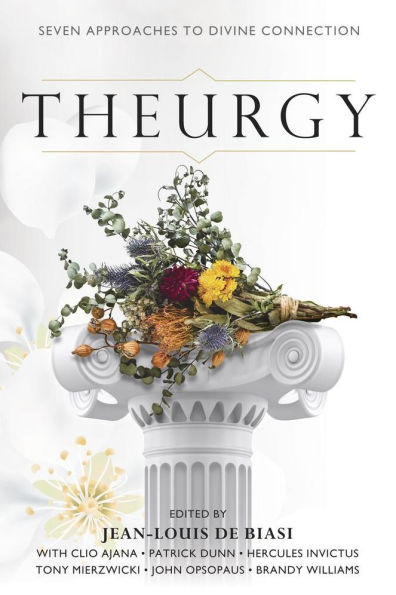
Theurgy is a set of techniques to awaken direct connection with and communication with goddesses and gods, not as abstract figures ‘out there’ but as persons and presences here and now. Approaches and experiences can range from prayer and magic through ritual embodiment to full-on possession trance.
I began Theurgy by gritting my teeth - I really dislike Platonism and neo-Platonism (as a philosophical materialist) and the introduction and first chapter are both big into that approach. This approach that relies on dualism of spirit and matter and philosophizing every experience and every deity just doesn't work for me. However, that first chapter by John Opsopaus has excellent scholarship, citing all the right names, providing a brief genealogy for the ideas and their revival by such as Jung, and his ritual work applying these ideas is very solid stuff. So, my discomfort was allayed.
Luckily for my remaining teeth, the other contributors’ sources and approaches range more widely, although remaining firmly in the Western European magical traditions, and there was a great deal that was more to my taste. The quality of the scholarship and discussion, however, remained quite impressive throughout, without lapsing into obscure or jargony language.
With an anthology such as this, with each author dealing with a different aspect of theurgy through personal experiences, I need to briefly summarize each chapter before giving an overall conclusion. After de Biasi’s introduction and Opsopaus’ ‘Platonic Theurgy’ comes Hercules Invictus’ Hellenic focus on images and objects as homes for the gods and channels for divine connection. Then Brandy Williams’ excellent broad ranging and comparative chapter (the only one to talk about the Afro-Caribbean influences into neo-Pagan theurgy) on ‘Carrying Deity in Modern Magical Practice’, Patrick Dunn on meditation and contemplation, de Biasi on the initiatory lineage and training in classical Platonic theurgy and the ‘eight rays’ / principles of that approach. Clio Ajana combines the metaphysical and intellectual approaches with the path of desire and emotional connection (a path of devotion, reminiscent of Indian bhakti yoga), then Tony Mierzwicki swings into a hybrid path approaching theurgy through Qabalah.
Each author provides a discussion of their sources and approaches, personal experiences, and a ritual developing on them, as well as a bibliography. These tastes of different approaches may be enough for those interested in exploring the path of direct conversation and involvement with their deities to begin along with whichever suits their inclinations. Several authors provide detailed instruction on preparing to do ritual, devotional practices and cautions (avoiding ego inflation from embodying a deity, for example, while retaining the lessons of the experience).
So, for a variety of flavours all drawing from the well-spring of Western European traditions, ultimately from the Eastern Mediterranean Greek and Egyptian sources of the later Roman Empire, this is a tremendous collection. There is exceptional theological and practical discussion here, very fine ritual work, and scholarship informed by personal experiment and experience.
It is a terrible thing to awaken a book nerd’s library envy! Do I now really need a copy of the Chaldean Oracles? Or the Greek Magical Papyri? More Plotinus, Porphyry, Iamblichus, Proclus? Probably not, given my personal practice, but reading Theurgy reminded me of some limits to my collection and practice.
~ review by Samuel Wagar
Editor: Jean-Louis De Biasi
Llewellyn Worldwide, 2025
242 pg. Paperback £17 / $32 Can / $23 US